
Recent Post


Khoya

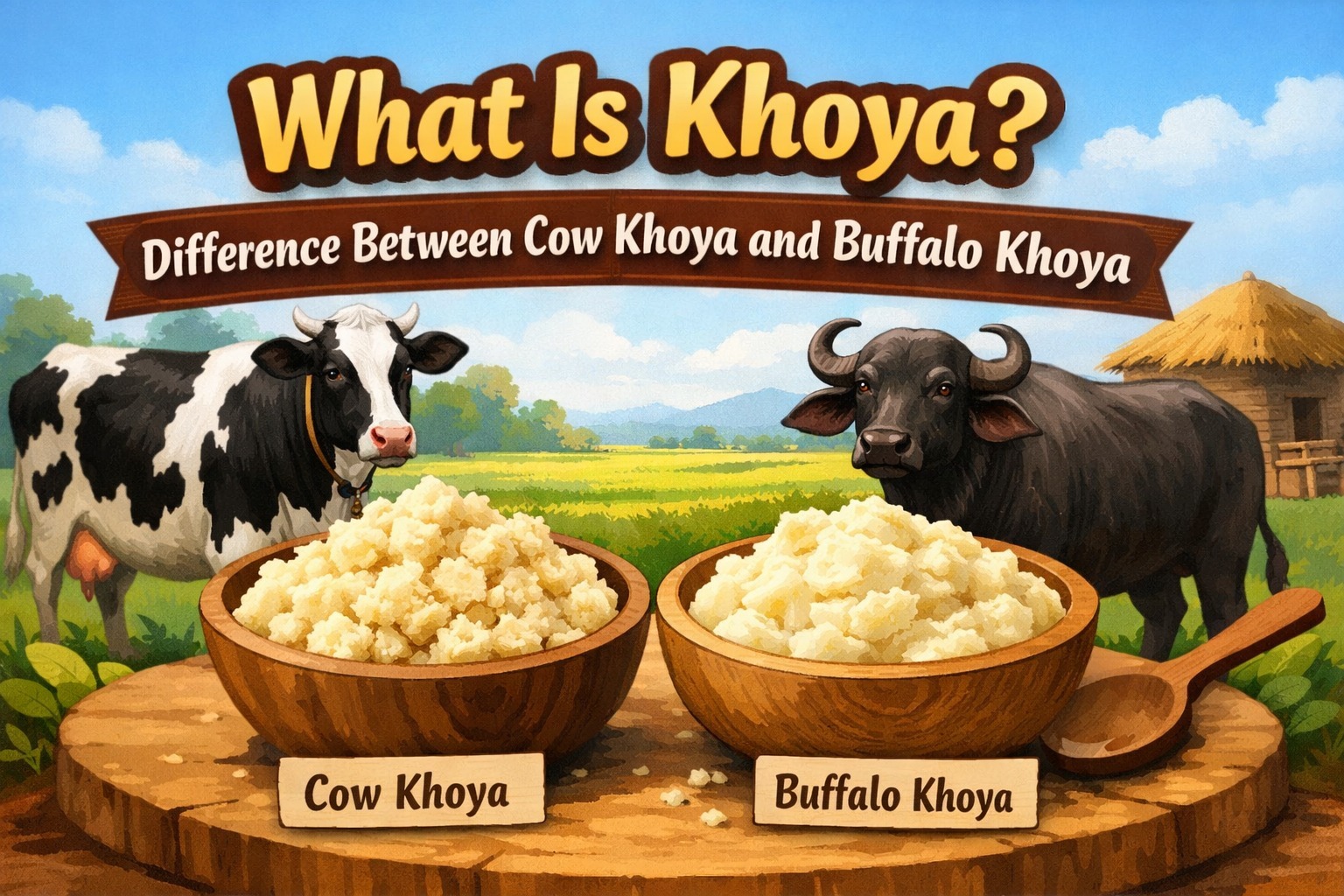
What Is Khoya? Difference Between Cow Khoya and Buffalo Khoya
In essence, khoya, alternatively called mawa, is an ingredient that gives a unique characteristic to some of the Indian sweets you know and love. If you have ever enjoyed a sweet and squishy peda or eaten a gulab jamun, there is no doubt that you have been able to experience first hand the power of khoya, without actually knowing about its presence in your food. Essentially, khoya is nothing more than milk that has been boiled for hours to reduce moisture content and convert the product into a dense, creamy and grainy mass.
The beauty of khoya lies in the fact that from the simple act of boiling the milk emerges a delicious treat. As the milk boils, its sugar contents and fats get concentrated leading to the development of the rich taste of khoya. This is basically a conversion of milk into its luxurious form. It can be seen across South Asia and even Nepal, where khoya is used in various dishes.
An emotional connection is also established when people think about khoya. It is often the smell of boiled milk during long hours that brings up happy memories of family gatherings and celebrations such as wedding ceremonies or the Hindu holiday of Diwali. And the thing that may surprise many is that whether the milk being used for making the substance is of cows or buffalos makes a big difference in the end. Something that JD Milk Foods Sweet carefully considers to deliver authentic taste and quality.
What Exactly Is Khoya Made Of?
By definition, khoya is a dairy-based product created through a prolonged evaporation process using full-fat milk. The type of milk, however, affects its composition, appearance, and taste greatly. The preparation method of the ingredient requires heating a large amount of milk in a wide and heavy bottomed pan for many hours, while constantly stirring to avoid burning.
Khoya contains almost all the ingredients of milk in smaller amounts. Therefore, it can be concluded that it has all the same nutrients found in milk in much lesser quantities. The main difference in composition lies in the content of fats, which may vary depending on what kind of milk is being heated.
The other intriguing factor about khoya is that no sugar is used to prepare it. The natural sweetness of khoya is imparted due to the presence of lactose, a sugar that exists in milk. In this way, it provides a basis for making sweet dishes as well as savory meals, even though the majority of recipes include the use of khoya in desserts.
Technically speaking, khoya is a dairy product with a significantly lower water content when compared to regular milk; khoya usually contains 20%–30% of water, whereas fresh milk consists of up to 85%–90%.
History and Cultural Significance of Khoya
The history of khoya goes back many years ago and has been associated with Indian culture. When there was no refrigeration, cooking milk down to khoya was one of the few methods that helped preserve the milk for a longer time period. From a food preservative, khoya became an integral part of sweets.
In the past, khoya became popular in the period of the Mughals when the royal kitchens started making experiments by creating a new recipe involving dairy products. This product was very appealing because it possessed an exquisite texture and flavor, which made it a top ingredient in various delicacies made for emperors and noblemen. These dishes gradually moved from one part of the country to another, each region introducing its unique taste and flavors.
To this day, khoya remains an important element in some religious rituals and festivals, where it is used as prasad in temple offerings. It is also associated with purity and prosperity and becomes highly demanded during such festivals as Holi, Diwali, and Eid, when people make a lot of traditional sweets.
How Khoya Is Made: The Traditional and Modern Methods
The Old Way of Getting Ready
Traditionally, people make khoya by cooking milk slowly in a kadhai, which is a large, flat, heavy-bottomed pan. The pan has a wide surface area, which helps the water evaporate faster, which is important for getting the right consistency. You can’t skip or rush this step: cook the milk over a low flame and stir it all the time. If you stop stirring, the milk can easily stick to the bottom and burn, which will ruin the taste.
As the milk cooks down, it gets thicker and forms soft lumps. The person making khoya has to keep scraping the sides of the pan and folding the thickened milk back into the middle. Depending on how much milk you have and how hot it is, this process can take anywhere from one to several hours.
It’s interesting to see how the texture changes as it cooks. It starts out as a smooth liquid. After that, it gets creamy and a little grainy. Finally, it gets to a semi-solid state where it can keep its shape. This last step is what we know as khoya.
Even though the traditional method takes a lot of work, it makes a product with a flavor that can’t be matched. Slow cooking lets the sugar caramelize a little bit, which gives khoya a rich, nutty flavor that is hard to get with faster methods.
Industrial Production and Differences
Though the conventional approach to preparing khoya may be endearing, current market demands have prompted many producers to adopt better and more effective ways of producing it. In the competitive environment in the current food industry, the manufacturing of khoya may involve the use of steam jacketed kettles, vacuum evaporators, and stirring machines that shorten the cooking process while preserving the quality.
During the industrial production of khoya, the milk is heated in regulated temperatures to prevent burning while promoting faster evaporation. In the process, the stirring process is carried out through the use of mechanical stirrers, thus providing even heating. In some instances, producers prefer using the vacuum technique since it brings down the boiling point of milk, meaning the milk will get thick without coming into contact with too much heat. This approach helps maintain the natural properties of milk although it may lack the qualities of traditionally produced khoya.
Another innovative trend in khoya’s history is the creation of instant khoya or khoya powder that is produced by drying out the milk solids thoroughly. Afterward, the powder can be mixed with either water or milk to create a substance that resembles fresh khoya. Although convenient, it does not entirely replace the real thing, mainly because of its rich and natural flavor.
The modern industrial production process of khoya has resulted in many other types designed for specific purposes. Khoya intended for gulab jamuns is softer than those used in making pedas, which require more effort to shape them into desired forms. Despite the advancements, many confectioners still use khoya that comes from local dairy producers due to the minute variations in their flavors.
Different kinds of Khoya you can buy
Batti Khoya
Batti khoya is the hardest and most solid type of khoya. It has a firm texture and very little moisture. You cook milk for a long time until almost all of the water has evaporated. This leaves behind a thick mass that can easily hold its shape. People often shape this kind of khoya into blocks or balls, and it has a slightly crumbly texture.
Batti khoya is great for sweets that need structure, like ladoos and burfis, because it is firm. You can also grate or crumble it, which makes it useful in recipes where you need to control the texture. Batti khoya has a stronger flavor because it cooks longer. It often has a hint of caramel that makes desserts taste better.
Chikna Khoya
Chikna khoya or smooth khoya is very soft and creamy. This kind of khoya holds much more moisture than batti khoya, hence its texture is almost like dough. Chikna khoya is made by heating milk for a shorter time than batti khoya, leaving some moisture behind.
This form of khoya is used especially when preparing gulab jamun and halwa, which require a smooth texture. It mixes easily with other ingredients to give an even mixture. Chikna khoya has a mild taste compared to batti khoya, which suits dishes that have many spices added to them.
Danedar Khoya
The grainy texture of danedar khoya makes it special. This is done by controlling the heat and stirring while it is being made. The milk solids don’t become smooth; instead, they form tiny granules that make the khoya feel a little rough.
People really like this kind for sweets like kalakand, where a grainy texture is not only okay but also wanted. The tiny granules soak up the sugar syrup perfectly, making a dessert that is rich but a little crumbly. Danedar khoya is a good choice for a lot of traditional recipes because it is neither too dry nor too wet.
Khoya’s Nutritional Profile
Key Nutrients and Their Advantages
The nutrient content of khoya includes protein, fats, and calcium, which make it a great food item when consumed in reasonable quantities. It helps in repairing and building muscles because of its protein content. Calcium ensures that there are strong bones and teeth in the body.
Furthermore, khoya is a great energy source because of its caloric content. Most of the water content is eliminated from the food product. As a result, there is an increase in the energy level of the individual who consumes it. People who require high ऊर्जा consumption can derive great benefits from khoya.
Another advantage of khoya is that it contains fats. Fats aid in the absorption of fat-soluble vitamins and supply sustained energy. However, it is important to keep in mind the caloric content of khoya before consuming it.
Caloric Value and Dietary Aspects
There is no doubt that khoya is rich, which implies that it is also rich in calories. Usually, in 100 grams of khoya, there may be up to 300-450 calories, and it depends on whether this khoya was produced using cow or buffalo milk, with buffalo khoya being richer than cow khoya.
Those who try to lose weight or struggle with their cholesterol should eat this product in limited portions because it is not recommended to avoid eating it at all. Despite that, if a person maintains his or her health by engaging in sport and consuming healthy food, then khoya products can be eaten without fear of gaining extra pounds.
Khoya is a food item which does not contain many carbohydrates since it is natural and unprocessed. That makes it an excellent ingredient for people following a low-carb diet. Nevertheless, the caloric value of the khoya changes once it becomes part of dessert products.
What Makes Cow Khoya Different from Buffalo Khoya
Differences in texture and consistency
The texture is one of the most obvious differences. Buffalo khoya is thicker, creamier, and richer because buffalo milk has more fat in it. It is usually smoother and more cohesive, which makes it perfect for recipes that call for a thick, rich texture.
Cow khoya, on the other hand, is lighter and has a little more texture. It doesn’t have as much creaminess, but it has a softer texture that works well in some sweets. Cow khoya is usually the better choice if you want something lighter.
Factors that Make Cow Khoya Unique from Buffalo Khoya
Apart from preference based on flavor, there is much to consider when making the decision between cow khoya and buffalo khoya as far as ingredients that make up the dessert are concerned. With knowledge of what to expect, the distinction between the two products becomes rather clear.
Cooking Uses and Suitability
Choosing the right kind of khoya can make or break your dish when you cook. Buffalo khoya is great for making rich sweets like barfi, peda, and gulab jamun that need to be creamy. It has a lot of fat, which makes it smooth and rich.
Cow khoya, on the other hand, goes well with lighter sweets like kalakand or kheer, where a slightly grainy texture makes the whole thing better. Also, it’s a better choice for people who don’t like heavy desserts.
How to Tell if Khoya is Good Quality
Visual and Textural Tests
It must also be firm to touch but soft enough to mold when compressed. Evidence of dryness or stickiness may suggest poor quality khoya.
Aroma is another critical determinant. High-quality khoya has an unmistakable aroma that smells like fresh milk without any traces of sourness or burning smell.
Adulteration Problems
Sometimes, khoya may be adulterated with ingredients like starch, vegetable oils, or milk powders to reduce production cost.
Khoya is used to make a lot of popular sweets
Famous Indian Desserts
Some of the most popular desserts made with khoya are:
Gulab Jamun, Peda, Barfi, and Kalakand
To get their unique flavor, each of these depends on the texture and richness of khoya.
Specialties from the area
Different areas have their own special foods made with khoya. There are many different kinds of sweets, like Mathura peda in Uttar Pradesh and kalakand in Rajasthan, and they are all very connected to the culture of the area.
How to store khoya and how long it lasts
Khoya goes bad quickly, so be careful when you handle it. It will last for 3 to 5 days in the refrigerator in an airtight container. Freezing is an option for longer storage, but it may change the texture a little.
Conclusion
Khoya is not just a dairy food product, it’s an essential ingredient for cooking and baking, history, flavors, and uses embedded in every bit. Cow milk khoya or buffalo milk khoya, each has their own characteristics. Understanding their characteristics will help you cook better and also understand how valuable khoya is in your kitchen.
FAQs
Q1. Is khoya same as condensed milk?
Ans. No, khoya has no sugar and condensed milk has sweeteners.
Q2. Buffalo khoya or cow khoya, which is healthy?
Ans. The answer would be cow khoya as it has lesser calories than buffalo milk khoya.
Q3. How do I know if khoya is spoiled?
Ans. The signs of going bad are a foul smell, change in color, and a slippery feel.
Leave A Comment