
Recent Post
Rusgulla

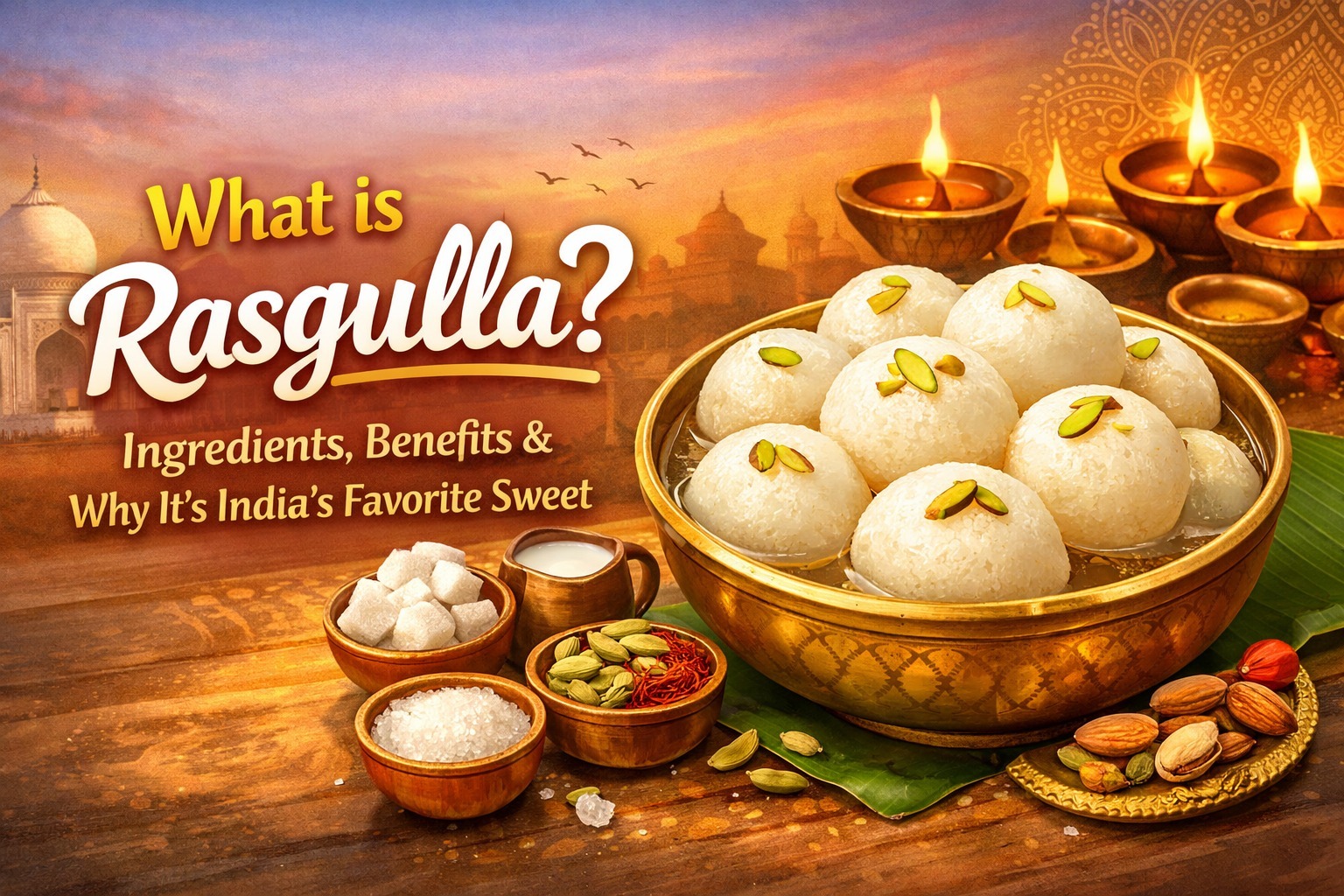
What is Rasgulla? Ingredients, Benefits & Why It’s India’s Favorite Sweet
What Is Rasgulla, Exactly?
You already know what Rasgulla is if you’ve ever bitten into a soft, spongy white ball soaked in sweet, light syrup and felt better right away. But for people who are seeing it for the first time, let’s start at the beginning.
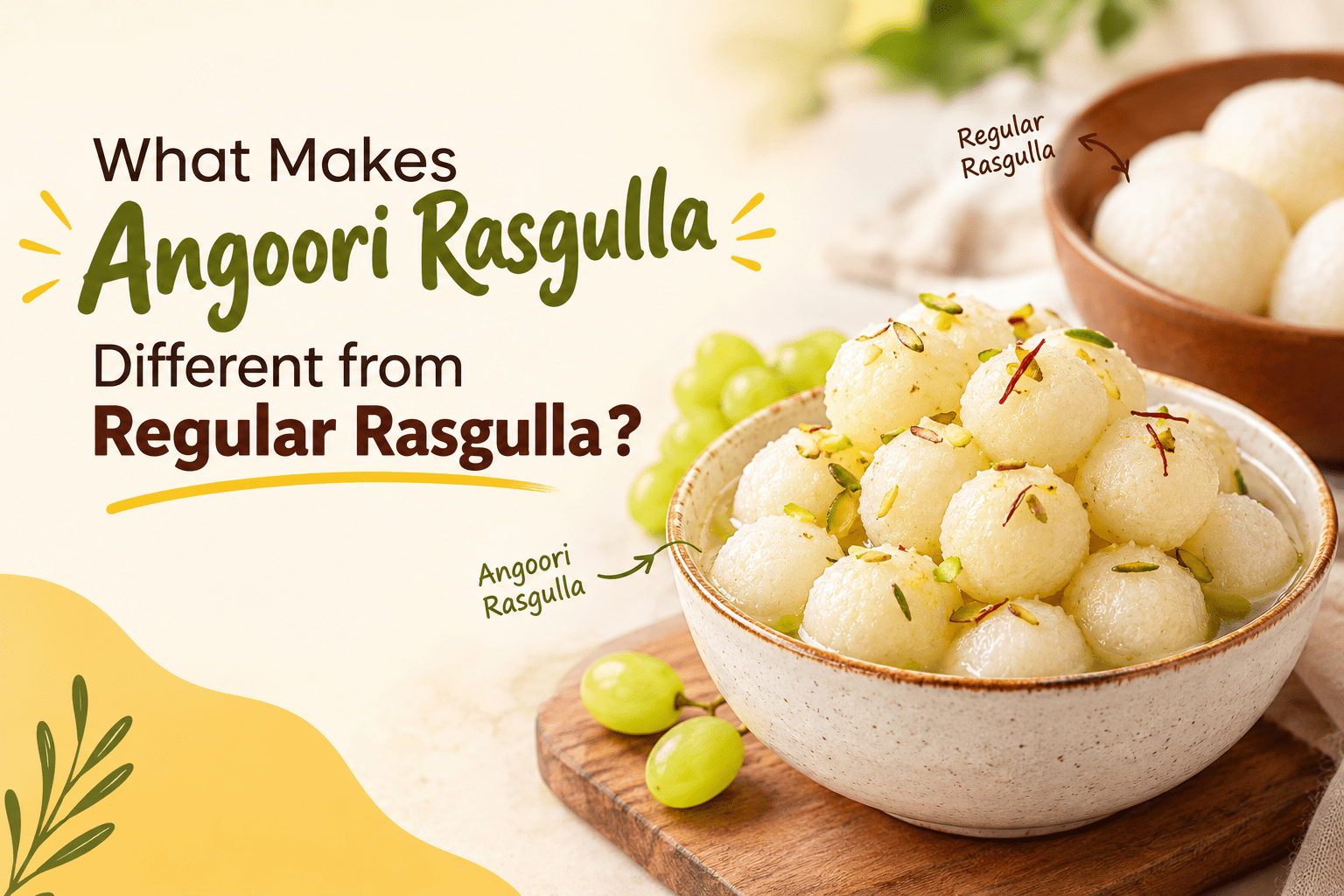
Rasgulla, which can also be spelled Rosogolla or Rasgola, is a traditional Indian sweet made from fresh cottage cheese (chenna) that is kneaded into smooth balls and then slowly cooked in a sugar syrup until they are soft, spongy, and just the right amount of sweet. The end result is a dessert that is light, juicy, and impossible to resist.
Rasgulla is different from most Indian sweets because it is simple and has a light texture. Most Indian sweets are rich, heavy, or fried. It is one of the few Indian desserts that feels rich but is surprisingly light.
The Story of Where Rasgulla Came From
There is a lot of debate about Rasgulla’s interesting history. Two Indian states, West Bengal and Odisha, have long claimed to be the home of this popular sweet.
West Bengal gives credit to Nobin Chandra Das, a candy maker from Kolkata, for making the modern Rasgulla in 1868. His recipe spread quickly through Bengal and then all of India. In fact, West Bengal got a Geographical Indication (GI) tag for “Banglar Rosogolla” in 2017, which officially recognized their special version.
Odisha, on the other hand, says that Lord Jagannath has been given a similar dish called Khira Mohana in the Puri temple for hundreds of years, making their version much older in tradition.
No matter where it really came from, Rasgulla is loved all over India and has fans all over the world.
The ingredients in Rasgulla are simple, pure, and strong.
One of the best things about Rasgulla is that it doesn’t need many ingredients. A classic homemade Rasgulla doesn’t have any fake flavors, complicated spices, or preservatives.
For the Chenna (Cottage Cheese)
Full-fat milk is the most important thing. The chenna has the right amount of fat when you use full-fat milk, which makes it soft and spongy.
Lemon juice or white vinegar are used to curdle the milk and separate the chenna from the whey.
For the Syrup of Sugar
Sugar: Normal sugar in white form is used regularly. Sometimes in recipes, some amount of rose water or cardamom is demanded.
Water is needed to make the syrup.
Rose water or cardamom (optional) adds a light floral scent that makes the taste better.
That’s all. The result is magic with just six simple ingredients.
What Is the Process for Making Rasgulla? A Step-by-Step Look
Making Rasgulla at home takes more time than skill. Here’s a short summary of the steps:
Boil and curdle the milk: Heat full-fat milk and slowly stir in lemon juice until the milk separates into chenna (solids) and greenish whey (liquid).
Drain and wash the chenna. Use a muslin cloth to strain it, rinse it under cold water to get rid of the lemon taste, and then let it drain for 30 minutes.
This is the most important step: knead the chenna. Knead the chenna with your palm for 8 to 10 minutes, or until it is smooth, soft, and a little greasy. There shouldn’t be any cracks left.
Make balls out of it—Roll it into small, smooth balls that don’t have any cracks. If they have any cracks, they will break while cooking.
Add the balls to a wide, deep pan of boiling sugar syrup (about 1:2 sugar to water) and cook them. Put a lid on it and cook it on medium heat for 15 to 20 minutes. They will get bigger and puff up.
Cool and serve: Let them cool in the syrup and then put them in the fridge for the best taste.
It takes about an hour to do everything, but the end result is well worth it.
Rasgulla’s Health Benefits
Because it’s a sweet, people don’t often talk about Rasgulla when they talk about health. But it has some real health benefits over most desserts, especially when eaten in small amounts.
- A good source of protein
Chenna, the main ingredient, comes from milk and is a good source of protein. Each Rasgulla gives you a small but useful protein boost, which makes it a better dessert choice than sweets that are mostly sugar or fat.
2. Gives You Energy Right Away
The sugar syrup gives Rasgulla quick-release carbs, which makes it a good source of energy after exercise or when you’re tired. For this reason, many Indian families serve it to guests who have traveled a long way.
3. Makes Bones Strong
Since rasgulla is made from milk, all the calcium and phosphorus contained in chenna are retained. These components strengthen the bones and teeth gradually.
4. Easy on the Stomach
This sweet delicacy does not have a heavy and oily nature as in the case of Gulab Jamun and Gajar Halwa. It is quite easy to digest.
People prefer it for the simple reason that it can be enjoyed after having meals.
Different types of Rasgulla that you should know
Rasgulla is more than one thing. It has changed over decades of regional and creative adaptation into many tasty kinds:
Rosogolla from Bengal is soft, spongy, white, and soaked in a light, clear syrup. The first and most well-known.
Baked Rasgulla is a modern take on the traditional dish. The cooked Rasgulla is baked until golden, giving it a slightly caramelized outer layer.
Chocolate Rasgulla is a fusion version in which cocoa is added to the syrup or the chenna itself.
Kesar Rasgulla: This dessert has a golden color and a strong smell because it is made with saffron-infused syrup.
Stevia Rasgulla is a sugar-free version made for people who love sweets but want to stay healthy.
What Makes Rasgulla India’s Most Popular Sweet?
If you ask an Indian what sweet reminds them of a celebration, Rasgulla will probably be on the list. Why? Because it is everywhere.
It is served at weddings, in temples as prasad, during Durga Puja celebrations, after job promotions, and at the daily tea table of every Bengali family. It doesn’t belong to just one event; it belongs to all of them.
Its low cost is also a big factor. Rasgulla is made from milk and sugar, which are two of the easiest things to find in the country. This is different from expensive dry fruits or imported chocolates. You can buy a box of Rasgullas for as little as ₹50 to ₹100, which makes them more democratic than most other sweets.
Then there’s the taste. It satisfies the need for sweetness without being too much for the senses. It isn’t too heavy or too sweet, and you want just one more.
Rasgulla and Rasmalai: What’s the Difference?
It’s easy to mix up Rasgulla and Rasmalai. Chenna is used to make both. But their experiences are very different:
FeatureRasgullaRasmalaiSyrupLight sugar syrupThickened sweetened milk (rabri)TextureSpongy, bouncySofter, flatterFlavorSubtle, simpleRicher, more aromaticOccasionEveryday and specialMore festive/special
In short, Rasmalai is a Rasgulla that has been soaked in flavored milk instead of plain syrup. It’s like the cousin who dresses up for family events.
Questions That Are Often Asked (FAQ)
Q1: Is it healthy to eat Rasgulla?
Ans. Yes, in small quantities. It is made from chenna and has protein. It is low in fat and lighter than most Indian sweets. But it does have sugar in it, so diabetics should check with their doctor before eating regularly.
Q2. Is it easy to make Rasgulla at home?
Ans. Sure. You only need milk, lemon juice, sugar and water to make restaurant style Rasgulla right in your home. The two most important steps are knead the chenna till smooth and cook in a wide covered pan.
Q3: How long does Rasgulla last?
Ans. The homemade Rasgulla will stay in its syrup in the refrigerator for 3-4 days. The shelf life of packaged Rasgulla may vary from one company to another.
Q4: Does Rasgulla have gluten in it?
Ans. Yes! Traditional Rasgulla has no wheat/gluten based ingredients. It’s gluten free so it’s a safe dessert for people who can’t eat gluten.
Q5. What makes Bengali Rasgulla different from Odia Rasgulla?
Ans. The Bengali Rasgulla is comparatively softer and spongier and is soaked in a light clear syrup. Odia versions tend to be more dense, chewy, and a little more yellow, as they use chenna with more fat, like Pahala Rasgulla.
Q6. Is it safe for people with diabetes to eat Rasgulla?
Ans. A standard Rasgulla contains a lot of sugar for Diabetics to eat daily. But there are sugar free or stevia based versions of rasgulla which you can have occasionally.
Q7: Why does my Rasgulla get hard when I make it?
Ans. The main reasons for hard Rasgulla are – not enough kneading of the chenna, over cooking or low-fat milk. Use full-fat milk always and knead the chenna until it is perfectly smooth before shaping it.
Leave A Comment